
Beijing will be intently watching Washington's response for any hint of weakness. Xi Jinping, who feels China has a limited window of strategic opportunity, will be emboldened to take additional initiatives in the Indo-Pacific and specifically against India and Taiwan, warns Jayadeva Ranade, the former senior RA&W officer and China expert.
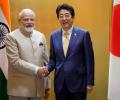
With the signing of the pact, the Quad grouping of India, Japan, Australia and the US is set to gain more heft now, notes Dr Rajaram Panda.

'The bigger challenge and dilemma for Pakistan would be if the US and Saudi Arabia go full throttle against Iran and enforce regime change in Tehran.' 'That would be bad news for Pakistan, especially with the current instability in Balochistan,' notes Brigadier Narender Kumar (retd).

'There will be much for President Trump and Prime Minister Modi to discuss including growing Chinese military cooperation with Pakistan, which heralds a new attempt by China and Pakistan to neutralise India's influence in its Indian Ocean neighbourhood,' notes Ambassador G Parthasarathy.
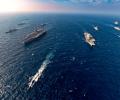
China's behaviour in the post-pandemic geopolitical landscape which may determine the Quad's future trajectory, notes former foreign secretary Shyam Saran.

European leaders are searching for solutions as conflicts in Syria and Iraq are sending thousands of refugees on dangerous voyages through the Balkans and across the Mediterranean to the 28-nation European Union. Here are the latest developments on the crisis.

'The potential of one such LAC engagement going out of control and leading to heavy casualties cannot be ruled out,' warns Lieutenant General Syed Ata Hasnain (retd).
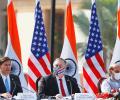
China is now the most significant strategic concern in Washington, as in most of the world's capitals, especially the democracies. Today, strategic autonomy has acquired a sharper definition: To ward off the Chinese challenge to India's territorial integrity, sovereignty and regional stature, observes Shekhar Gupta.

'There seem to be no reason why Assad should have launched such an attack when he was gaining acceptability,' says Brigadier S K Chatterji (retd).
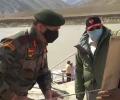
'We should not minimise the seriousness of Chinese encroachments because their perception is different.' 'Nor should we fall into the trap of accepting so-called 'buffer zones' in areas of overlapping claims. We cannot have buffer zones in our own territory,' asserts Ambassador Shyam Saran, a former foreign secretary.

New Delhi's growing defence partnership with Tokyo could take wing with the US-2 (Utility Seaplane Mark 2), a one-of-a-kind amphibious aircraft that has Indian naval planners goggle-eyed.

The bogey of the 1962 defeat must be laid to rest with a finality that is unquestionable. The myth of Chinese invincibility is a tall tale that belongs to an era gone by, says Vivek Gumaste.

On display was India's military might and cultural diversity.

From the Syrian civil war to the Ukrainian crisis to the terror unleashed by the dreaded Islamic State, there was no lack of news in 2014. In this five-part series, rediff.com presents a selection of the year's most enduring moments year from around the world.
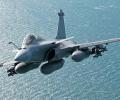
Rahul Bedi explains how 'miscellaneous' factors have posed a major hurdle in negotiating the Rafale deal.

The 41st US president held his post from 1989 and 1993.
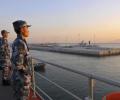
China released a white paper against the UN-backed tribunal's verdict, insisting that Beijing has claims over the strategic region for 2,000 years.

India needs to have a re-look of whole gamut of its relations with major powers and also prepare for a more turbulent neighbourhood. But such is the tyranny of Indian status quo mindset that any talk of re-look at nuclear doctrine or foreign relations is treated as blasphemy, says Colonel (retd) Anil Athale.

We mourn the passing of Admiral J G Nadkarni, who passed into the ages on Monday. The admiral -- one of the finest officers to head the Indian Navy and a most remarkable human being -- was one of Rediff.com's earliest columnists. His assessment of why India won the 1971 War is a classic and we republish the column today to celebrate his brilliant mind and salute an office and gentleman, the likes of who we will not see again.
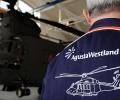
We get tangled up in our own crooked web on purchases, and the murky arms bazaar knows it, says Shekhar Gupta.

'As in the Panchatantra tale of the cat and the monkeys, it is possible for the clever swing State to play off the two competing powers.'

'Why can't a person who has supervised military intelligence head RA&W?' 'Why can't one who has overseen national security planning become our NSA or chair the National Security Advisory Board?' asks Vice Admiral Premvir Das (retd).

'Make in India' will be central to Mr Modi's visit to Europe and Canada. It is difficult to predict what will happen with the Rafale deal, but if it goes through, it will undoubtedly become the 'Mother' of all 'Make in India' projects,' says Claude Arpi.

Excerpts from Prime Minister Narendra Modi's speech at the Combined Commanders Conference on board the INS Vikramaditya at sea, off the coast of Kochi.

Irked by India's status as the world's biggest arms importer, Modi wants to build an advanced defence industry

Could Mumbai have been saved from terror on November 26, 2008? Perhaps, had the intelligence agencies of India, United States and Britain worked together.

Pakistan-based Lashkar-e-Tayiba's technology chief had posed as an Indian businessman while negotiating to buy from an American company a Voice-over-Internet Phone service that was later used by the LeT handlers to communicate with 26/11 attackers while concealing their actual origin.

'One hopes the younger generation sees Savarkar him for what he was and does not view him through a distorted prism.' 'This is the least one could do for someone who devoted his whole life to Indian freedom struggle, elimination of caste, succour to Dalits, and instilling of strategic culture in India,' says Lieutenant General Ashok Joshi (retd) and Colonel Anil A Athale (retd).

President Xi Jinping's visit may put relations between India and China on a new trajectory

When Rediff.com's Archana Masih and Rajesh Karkera set course from the foothills of the Himalayas to the Arabian Sea, they could not think of a better place to begin their journey than the stately campus that has given India some of its greatest military heroes.

PM Modi seems to be gradually ending India's strategic ambiguity
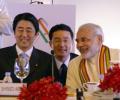
'Both nations have a common problem: A rampaging, jingoistic and hostile China which is making substantial territorial claims. In the long run, Japan and India are going to be the victims of Chinese aggression -- so they might as well hang together to contain China,' argues Rajeev Srinivasan.

'It is vital we should form an international coalition against ISIS, because their brutality and the use of the Internet for jihadist activities is a reminder that the entire world community has to be in this together,' US Congressman Ed Royce, chairman of the House Foreign Affairs Committee, tells Aziz Haniffa/Rediff.com in an exclusive interview ahead of Prime Minister Modi's visit.
 © 2026 Rediff.com - Advertise with us - Disclaimer - Privacy Policy - Sitemap - Feedback - About us - Terms of use - Grievances